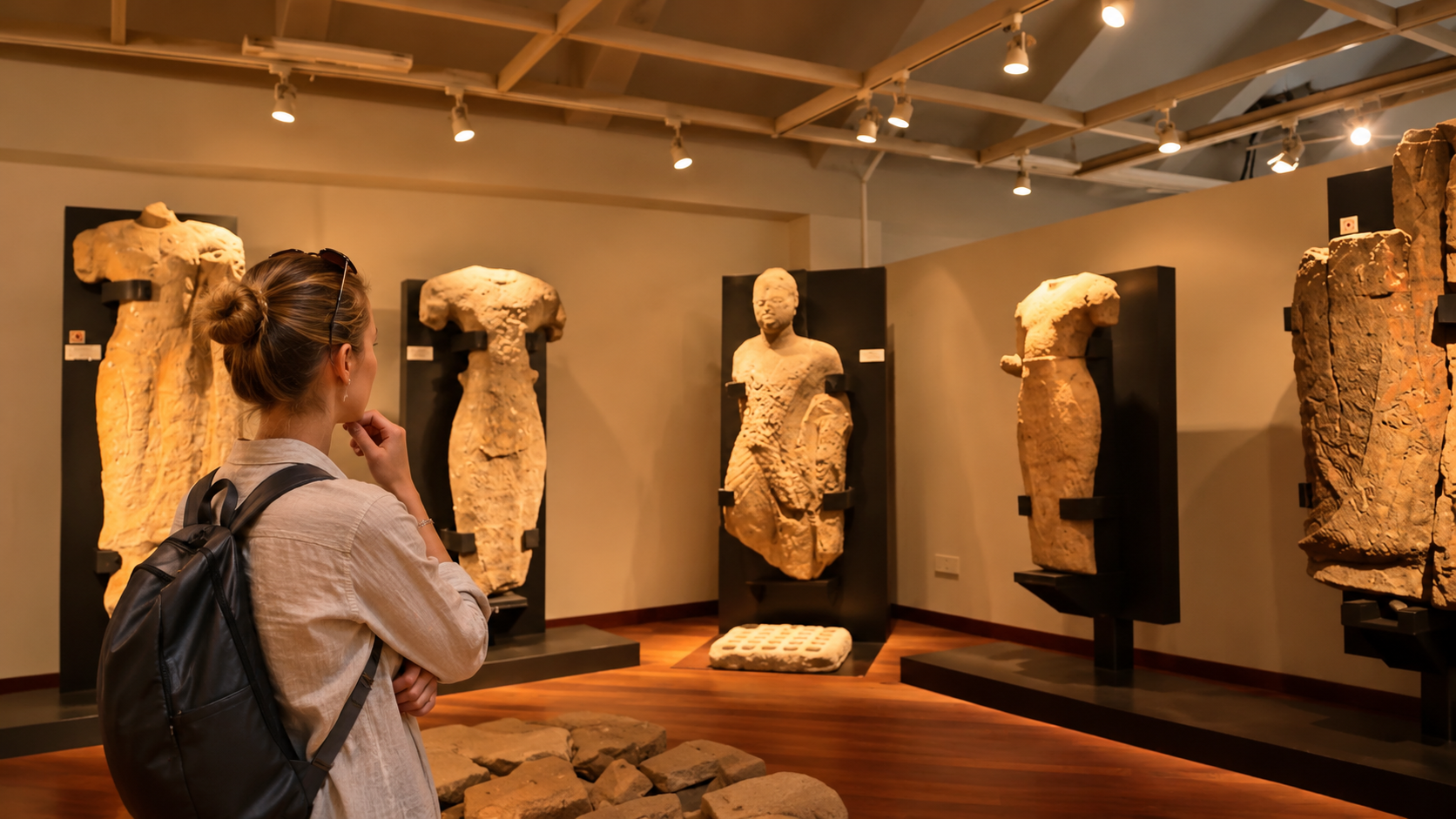
Sigiriya Museum: What Can You See Inside?
Sigiriya Museum is one of the most interesting places to visit before exploring Sri Lanka’s famous Lion Rock. While the ancient fortress reveals the remains of palaces, gardens and staircases, the museum helps visitors understand how these structures were built and what life around Sigiriya was like centuries ago.
Located near the Sigiriya archaeological site, the museum brings together ancient artefacts, architectural models, paintings and archaeological discoveries that explain the history of this UNESCO World Heritage Site.
Where Is Sigiriya Museum Located?
Sigiriya Museum is situated close to the main entrance and ticketing area of the Sigiriya Rock Fortress archaeological complex.
Managed by Sri Lanka’s Central Cultural Fund, the museum opened in its present building in 2009 with Japanese assistance.
What Can You See Inside Sigiriya Museum?
1. A Model of the Ancient Sigiriya Fortress
The model shows how Sigiriya was designed around the enormous rock, with formal gardens, pathways, defensive structures and buildings arranged across the surrounding landscape.
It helps visitors understand that Sigiriya was not simply a palace on a rock but a carefully planned urban complex.
The museum also includes a visual reconstruction of the royal palace that once occupied the summit.
2. Ancient Tools and Archaeological Discoveries
The museum contains artefacts recovered during excavations around Sigiriya and nearby archaeological sites.
These include pottery, stone tools, iron objects and other evidence of early human activity.
One remarkable exhibit is a prehistoric human skeleton discovered at the Pothana rock shelter near Sigiriya.
3. The Sigiriya Frescoes
Sigiriya is famous for its ancient paintings of female figures, commonly known as the Sigiriya frescoes.
Inside the museum, visitors can explore reproductions and interpretive displays relating to these paintings.
For a closer look at the mystery surrounding these figures, read Sigiriya Frescoes: Who Are the Women in the Paintings?.
4. The Mirror Wall and Ancient Writing
Another fascinating part of the museum explores Sigiriya’s Mirror Wall.
The original wall, located along an elevated pathway on Lion Rock, preserves poems and inscriptions written by visitors centuries ago.
Museum displays explain the significance of these writings and include reproductions of the ancient graffiti.
Learn more in Sigiriya Mirror Wall: Why Was It Created?.
5. Jewellery, Coins and Pottery
The museum also displays objects that reveal aspects of everyday life and material culture around ancient Sigiriya.
Visitors can see examples of jewellery, pottery, coins and decorative objects.
One notable display includes a replica of an elaborate gold earring, allowing visitors to appreciate the craftsmanship of the original.
6. Ancient Engineering and Water Gardens
Sigiriya is particularly famous for its sophisticated landscape design and water-management systems.
Museum models and architectural displays explain the layout of the royal gardens, buildings and waterways.
For more information about the engineering behind the gardens, explore Sigiriya Water Gardens: How the Ancient System Worked.
What Should You Know Before Visiting?
- Opening hours: Published visitor information lists 8:00 AM to 5:00 PM, although hours should be confirmed before visiting.
- Tickets: Museum admission is generally included with the Sigiriya archaeological-site ticket. Check current ticket conditions.
- Photography: Photography is restricted in the permanent history and archaeology gallery. Follow displayed instructions.
- Accessibility: The museum has been designed with accessibility facilities, including a lift and wheelchair access.
- Location: The museum is close to the main archaeological entrance, making it convenient to combine both attractions.
Is Sigiriya Museum Worth Visiting?
For travellers interested in history, archaeology and ancient architecture, the museum adds valuable context to a visit to Lion Rock.
The archaeological site shows what remains of Sigiriya today, while the museum helps explain the people, technologies and historical developments behind those remains.
Conclusion
Sigiriya Museum offers an informative introduction to one of Sri Lanka’s most remarkable ancient cities.
A visit to the museum before exploring Lion Rock can make the archaeological site more meaningful, helping travellers recognise the remarkable planning, craftsmanship and cultural history behind the surviving ruins.